Sikh Gurus

The "Gurus" in Sikhism are regarded as enlighteners and divine messengers. They were the messengers of the Timeless, who brought forth the eternal wisdom. They were universal men who freed our minds from bigotry and superstitions, dogmas and rituals, and emphasized the simplicity of the religion.

Martyrdom of Guru Teg Bahadur Ji

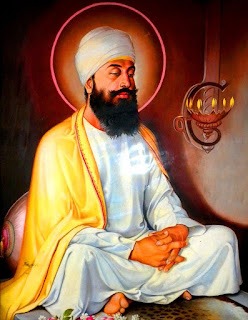
Guru Tegh Bahadur Ji
Divine Attribute: Tranquility; Guru from 1665 to 1675

He was born in 1621 in Amritsar. He established the town of Anandpur. The Guru laid down his life for the protection of the Hindu religion, their Tilak (devotional forehead markings) and their sacred (janeau) thread. He was a firm believer in the right of people to the freedom of worship. It was for this cause that he faced martyrdom for the defence of the down-trodden Hindus. So pathetic was the torture of Guru Tegh Bahadur that his body had to be cremated clandestinely (a follower burned down his own home to cremate the Guru's body) at Delhi while his severed head was secretly taken four hundred kilometers away to Anandpur Sahib for cremation. Because of his refusal to convert to Islam a threatened forced conversion of the Hindus of Kashmir was thwarted.

10. Guru Gobind Singh Ji

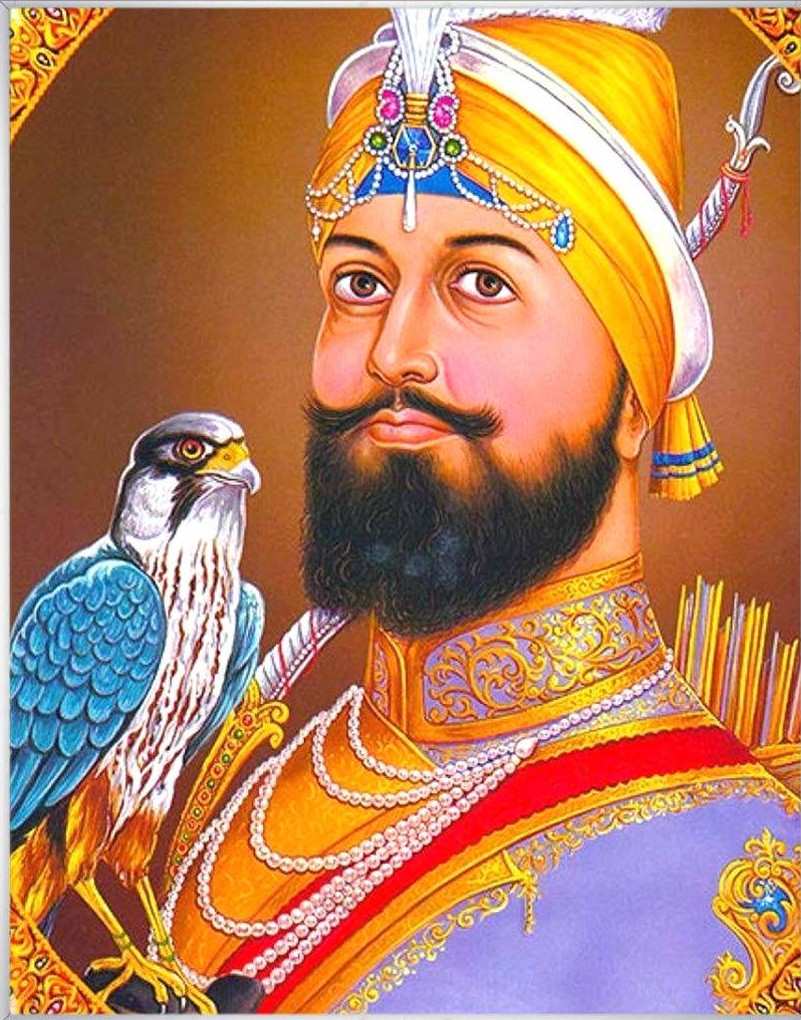
Guru Gobind Singh Ji
Divine Attribute: Royal Courage; Guru from 1675 to 1708

He was born in 1666 and became Guru after the martyrdom of his father Guru Tegh Bahadur. He created the Khalsa (The Pure Ones) in 1699, changing the Sikhs into a saint-soldier order with special symbols and sacraments for protecting themselves. After the Guru had administered Amrit to his Five Beloved Ones, he stood up in supplication and with folded hands, begged them to baptize him in the same way as he had baptized them. He himself became their disciple (Wonderful is Guru Gobind Singh, himself the Master and himself the disciple). The Five Beloved Ones were astonished at such a proposal, and represented their own unworthiness, and the greatness of the Guru, whom they deemed God's representative upon earth. He gave the Sikhs the name Singh (lion) or Kaur (princess). He fought many battles against the armies of Aurangzeb and his allies. After he had lost his father, his mother and four sons to Mughal tyranny, he wrote his famous letter (the zafarnama) to Aurangzeb, in which he indicted the Grand mughal with his treachery and godliness, after which the attacks against the Guru and his Sikhs were called off. Aurangzeb died soon after reading the letter. Soon, the rightful heir to the Mughal throne sought the Guru's assistance in winning his kingdom. It was the envie and fear of the growing friendship between the new Emperor and the Guru which lead to the sneak attack of the Pathan assasins of Wasir Khan who inflicted the wound which later caused the Guru's death. Thus the tree whose seed was planted by Guru Nanak, came to fruition when Guru Gobind Singh created the Khalsa, and on 3 October 1708, appointed Guru Granth Sahib as the Guru. He commanded: "Let all bow before my successor, Guru Granth. The Word is the Guru now."
11. Guru Granth Sahib Ji

Guru Granth Sahib Ji
Source of Divine Wisdom, Grace, and Liberation; Guru from 1708 to eternity

Guru Granth Sahib (also known as the Adi Granth) is the scripture of the Sikhs. No Sikh ceremony is regarded as complete unless it is performed in the presence of Guru Granth Sahib. The Granth was written in Gurmukhi script and it contains the actual words and verses as uttered by the Sikh Gurus. It is considered the Supreme Spiritual Authority and Head of the Sikh religion, rather than any living person. It is also the only scripture of its kind which not only contains the works of its own religious founders but also the writings of people of other faiths. The living Guru of the Sikhs, the book is held in great reverence by Sikhs and treated with the utmost respect. Guru Granth Sahib is a book of Revelation. It conveys the Word of the Master through His messengers on earth. It is universal in its scope. The greatness of the Guru Granth Sahib lies not only in its being the Holy Scripture of the Sikhs but also in it being a general scripture available to mankind, intended for everybody, everywhere.

Back
Share This Page