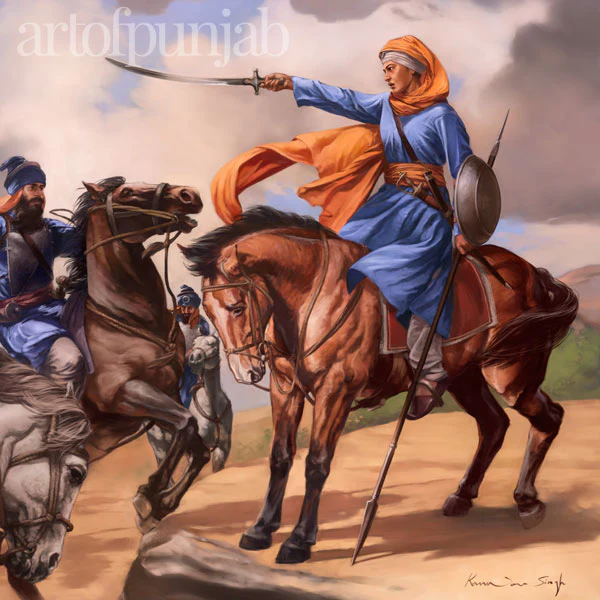
Who Was Mai Bhago Ji?
Mai Bhago Ji (also known as Mata Bhag Kaur) was a courageous Sikh woman who lived during the 17th century. She is best remembered for rallying and leading 40 Sikh deserters back into battle at Muktsar Sahib and defending Guru Gobind Singh Ji with unmatched bravery. She is hailed as the first woman warrior of the Khalsa.
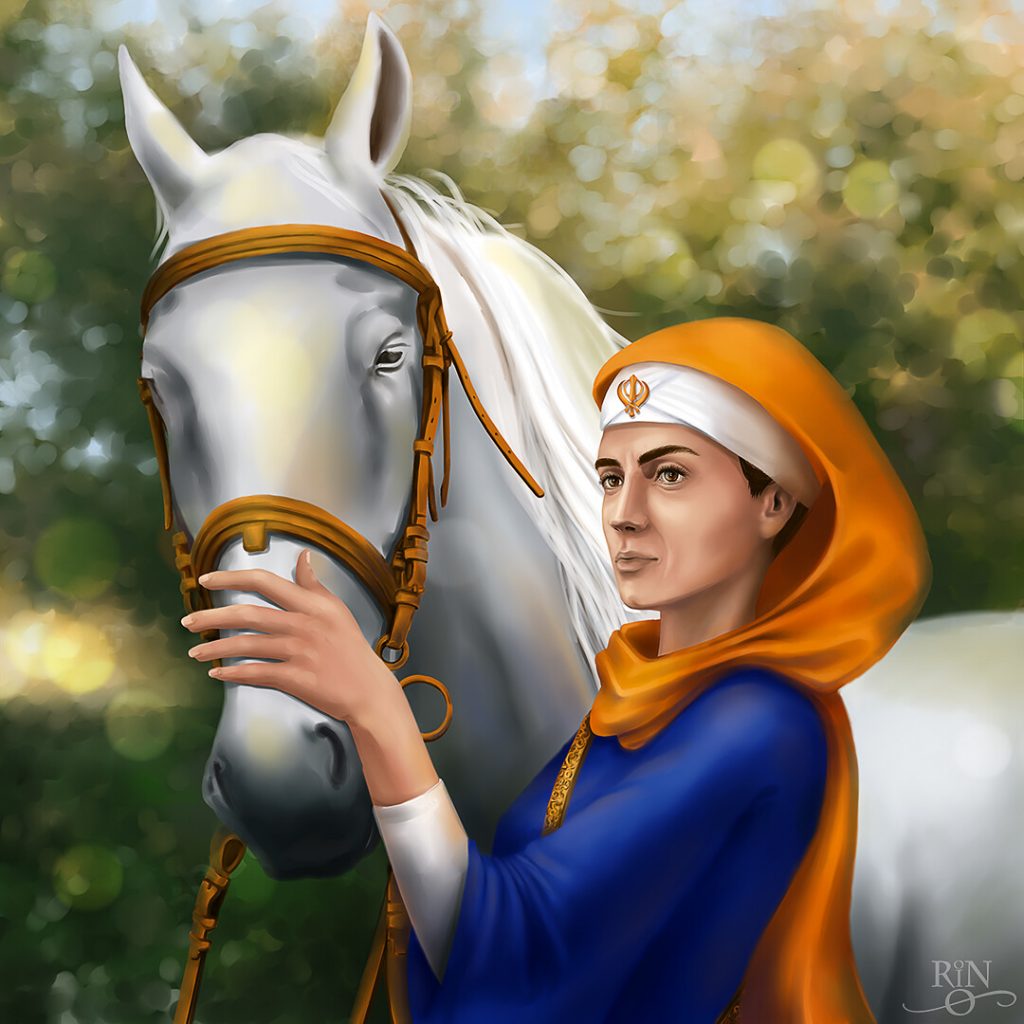
Early Life - Mai Bhago Ji
Mai Bhago was born in the village of Jhabal Kalan (Amritsar district) in a devout Sikh family. From a young age, she was inspired by the bravery of Sikh martyrs and received training in horse riding, swordsmanship, and spiritual teachings. She was a strong believer in Guru Gobind Singh Ji’s mission and ideals.
The 40 Liberated Ones (Chali Mukte)
During the siege of Anandpur Sahib in 1704, 40 Sikhs deserted Guru Gobind Singh Ji and signed a document stating they were no longer his Sikhs. When Mai Bhago heard of this, she was outraged. She confronted the deserters and shamed them for abandoning the Guru in his time of need. Her words and spirit reignited their faith, and she led them back into battle.
This historic act took place at the Battle of Khidrana (later renamed Muktsar Sahib), where all 40 Sikhs attained martyrdom, fighting bravely alongside Mai Bhago. Guru Gobind Singh Ji blessed them as "Chali Mukte" (the Forty Liberated Ones).
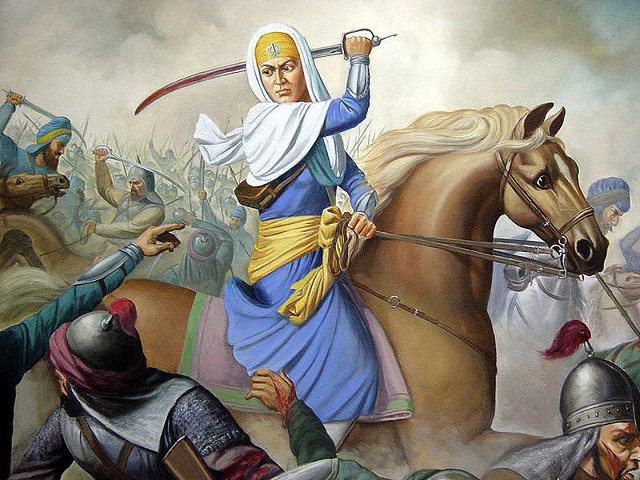
Warrior and Bodyguard
After the battle, Mai Bhago continued to serve Guru Gobind Singh Ji and later became his personal bodyguard. Dressed in warrior attire and armed with weapons, she accompanied him in his travels and protected him from threats.
Later Life - Mai Bhago Ji
After Guru Gobind Singh Ji’s passing in 1708, Mai Bhago Ji retired to a life of meditation and spirituality in the village of Janwada (near Bidar in Karnataka). She spent her final years in devotion and teaching Sikh principles to others.
Legacy - Mai Bhago Ji
Mai Bhago Ji is celebrated as a symbol of Sikh bravery, spiritual strength, and gender equality. Her story has inspired generations of Sikhs, especially women, to rise in defense of justice and righteousness. Today, she is remembered in Sikh history as a saint-soldier who lived with honor and died with dignity.