
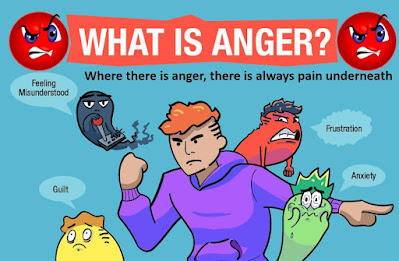
Anger is an emotion that tells us a situation is upsetting, unjust, or threatening. Anger is an active manifestation of sadness — we need to identify and eliminate our sorrow before we can confront our anger. Anger is an extension of ego, and whenever we act in anger, deep within us we are actually feeling sad. So sadness is a passive form of anger; when we cannot express our anger, we feel sad within. Whether we are sad or angry, we only need to ask ourselves one question: what is it that I am sad about?
Anger can be detrimental to both our emotional and physical health. When we're angry, our body goes through physiological changes — the heart rate quickens, blood pressure spikes, and hormones like adrenaline and noradrenaline are released, which over time can contribute to high blood pressure, depression, anxiety, insomnia, gastric ulcers, and diabetes.
When we feel angry over being mistreated or wronged, the people around us can be too sensitive, get hurt, and feel disheartened — which also shapes how people perceive us, and can get in the way of our own growth and success.
If anger is an expression of sadness, removing sadness will automatically do away with anger — and the simplest answer to getting over sadness is nurturing happiness. We have an opportunity to be happy or to be sad. Some tips to be happy: live in the present, count your blessings, be kind to yourself, challenge negative thoughts, meditate, meet with friends, practise gratitude, exercise, think rationally instead of emotionally, and build a positive support system.
We could also try reconciling opposites — try liking what we dislike. It isn't easy, but it can free us from unprofitable bondages into inner freedom. The way we respond should be controlled by us; we cannot hand that control to anyone else to press our buttons and make us feel angry, as if we were being operated by a remote control.
Identify ways to be happy to avoid anger, and identify your Purpose of Life.