
GURUDWARA RAMSAR SAHIB JI
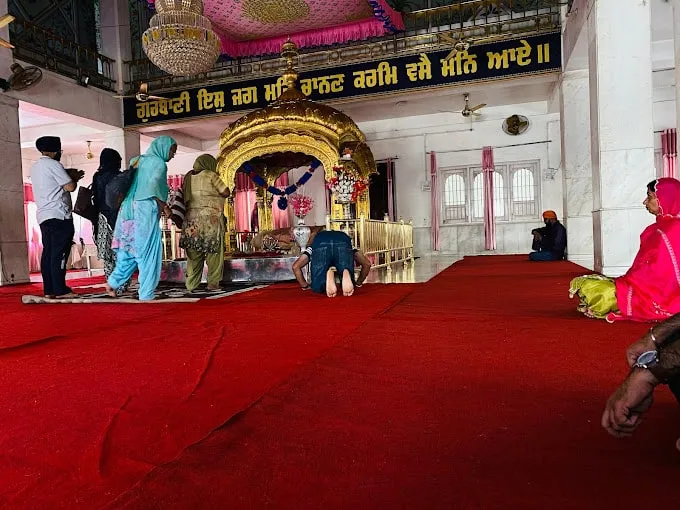
Gurudwara Shri Ramsar Sahib is located in the Chattiwind Gate area of Amritsar. This sacred site was established by Guru Arjan Dev Ji, who had a holy tank (Sarovar) excavated and named it Ramsar Sahib in honor of Shri Guru Ramdas Ji. It was a tranquil place where Guru Sahib set up his tent on the southern side of the Sarovar.
Guru Arjan Dev Ji began dictating the Shri Guru Granth Sahib Ji to Bhai Gurdas Ji at this site, incorporating the hymns of the first four Gurus, including his own, and selections from Hindu and Muslim mystic saints. Upon its completion in 1604, the holy scripture was installed with due honor at Shri Harimandir Sahib. Today, the modern printing of the Shri Guru Granth Sahib is carried out here.
Gurudwara Ramsar Sahib, one of the notable gurudwaras in Amritsar, is situated on the bank of its namesake pool, northeast of the Golden Temple. Guru Arjan Dev Ji spent over a year here in seclusion with Bhai Gurdas, compiling the holy Adi Granth. This sacred volume was completed in 1604 and ceremoniously installed in Harmandir Sahib. It embodies the unity of God and the brotherhood of mankind, preserving the pure philosophy of the Gurus for perpetual guidance.
The Adi Granth, arranged according to musical measures for singing, was later given the status of the Guru by Guru Gobind Singh Ji. Before his departure on October 7, 1708, he declared, “Accept Guru Granth Sahib as the visible image of the Guru.” This proclamation ended the line of human Gurus, enjoining Sikhs to revere the Granth Sahib as their eternal Guru. Thus, Gurudwara Ramsar, where the sacred text was compiled, holds immense significance for Sikhs.
The Gurudwara, situated on the bank of the Ramsar Sarovar near Chattiwind Gate, was a secluded site chosen by Guru Arjan Dev Ji for its peacefulness, one kilometer away from the town’s bustle. To enhance the surroundings, he had the tank dug and named Ramsar after Guru Ram Das.
Here, Guru Arjan composed the famous Sukhmani Sahib (Psalm of Peace) and, with Bhai Gurdas as his scribe, compiled the Adi Granth between 1603 and 1604. The present Gurudwara, built in 1855, features a small marble-lined hall topped by a gilded, fluted lotus dome, marking the site of Guru Arjan’s work.