
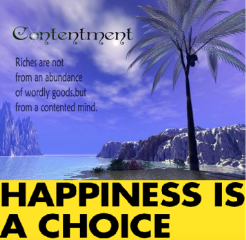
To be content is not the same as to be satisfied. Satisfaction means getting what you want; contentment means being happy with what you already have.
Satisfaction is a state of body and mind
Satisfaction is rooted in the past, is conditional, and comes from reaching a desired goal — an internal bargaining that ends at an acceptable point of closure. On its own, being satisfied can mean lacking ambition, never wanting more; but it's fine to want more, as long as we find our Purpose of Life — an ultimate goal, broken into smaller, bite-size goals that lead toward it.
Contentment is a state of soul and spirit
Contentment applies to the present, is unconditional, and is a pause to recognise that we're happy where we are right now. Saying “I'm content with my life” doesn't necessarily mean happiness or satisfaction — it means being at peace with our circumstances, appreciating what we have while still striving for more. We can have peace in the midst of the storm, but we certainly still want to be out of the storm.
We can be content by being thankful for basic necessities — food, shelter, family, friends, health — while recognising many people lack these, and volunteering to help those less fortunate. A long-term prisoner could be “content” with prison life in the sense of accepting his circumstances, without that meaning he's happy or satisfied.
Many successful people are never content. If we are never satisfied, we will strive to achieve more and be successful. But if we are never content, we will never attain happiness.